
Press
When the “happiness hormone” is missing
CAUSES, SYMPTOMS AND WAYS OUT OF SEROTONIN DEFICIT
Language: German
Published on: www.der-privatarzt.de
When the “happiness hormone” is missing
CAUSES, SYMPTOMS, AND WAYS TO ADDRESS SEROTONIN DEFICIENCY
Dr. Jan-Dirk Fauteck, MD (I)
Not only does serotonin play a central role in the brain, influencing mood and well-being, but it also acts as a versatile messenger in the gut and the immune system. In this interview, Dr. Jan-Dirk Fauteck explains what it means when there is a serotonin deficiency in both the nervous system and the peripheral organs.
Many people primarily associate serotonin with depression. Is that too simplistic?
Absolutely. About 90% of the body’s serotonin is produced in the gut, where it regulates gut motility and even influences the immune system. In the brain, however, serotonin is synthesized in significantly smaller quantities, but there it has a strong effect on mood, motivation, sleep, and pain perception. Therefore, a serotonin deficiency is a holistic problem, not just a psychological one.
What are the specific consequences of a serotonin deficiency?
The range is broad: depression, sleep disorders, and lack of motivation are among them. Many gastrointestinal problems are also associated with a serotonin deficiency. Furthermore, a domino effect usually occurs: If serotonin is lacking, other neurotransmitters are often also deficient. Consider melatonin: It is formed from serotonin in the evening. Therefore, low serotonin levels often mean poor sleep.
How does a serotonin deficiency in the central nervous system differ from one in the periphery?
In the central nervous system, serotonin deficiency typically manifests as depressive moods, anxiety disorders and panic attacks, fibromyalgia, sleep disturbances, and reduced appetite control. In the periphery, however, it can lead to conditions such as irritable bowel syndrome, chronic inflammation, and pancreatic dysfunction. Particularly interesting: The blood-brain barrier prevents serotonin from crossing from the body into the brain. This means that the two systems are functionally separate – therefore, a deficiency must be considered separately in both locations.
How does a serotonin deficiency develop?
There are two main causes. Either the body produces too little serotonin – for example, due to of a lack of nutrients such as B vitamins or tryptophan and 5-hydroxytryptophan (5-HTP). Age also plays a role, as serotonin levels change as we get older. It is also possible that the body produces enough serotonin, but doesn’t utilize it properly, for example, because the receptors no longer function as they should.
Are there typical triggers for such a double deficit?
Yes. Chronic stress, for example, is a significant factor, among many others. It shifts metabolic processes, so that the serotonin precursor tryptophan is increasingly diverted into pro-inflammatory side pathways. Disruptions of the gut microbiota also play a role. An imbalance in gut flora reduces local serotonin production and, via the gut-brain axis, in turn affects the brain.
Is it possible to supplement serotonin through diet, for example?
Serotonin itself cannot be supplemented this way, as it is broken down in the gut and does not reach the brain. A more effective approach is to consume tryptophan or 5-HTP, found in foods such as nuts, bananas, or legumes. However, without sufficient vitamin B6, magnesium, and a healthy gut, even the best raw materials are ineffective.
What therapeutic options are available to support serotonin production?
In the central nervous system, selective serotonin reuptake inhibitors (SSRIs) or serotonin-norepinephrine reuptake inhibitors (SNRIs) are frequently used, although these are sometimes associated with serious side effects. However, some time ago, it was possible to develop a chronobiologically optimized combination regimen of 5-HTP and L-tryptophan.
In this approach, 5-HTP from Griffonia seeds is administered in a low, quick-release dose – approximately 50 mg – followed by a delayed-release L-tryptophan dose of around 250 mg. This allows the 5-HTP to reach the central nervous system directly, while the tryptophan crosses the blood-brain barrier later. This specific release mechanism prevents degradation, and the brain can produce serotonin under conditions that closely resemble natural processes.
What is special about Griffonia?
The seeds of Griffonia simplicifolia are true serotonin boosters, as they contain up to 30% natural 5-HTP – which is exceptionally high. In herbal medicine, Griffonia has long been used for depression, anxiety, migraines, and sleep disorders. The great advantage of the 5-HTP it contains is that it crosses the blood-brain barrier without detours and reaches the brain directly. Nevertheless, it should not be taken without consulting a doctor, and especially not in combination with antidepressants.
Your conclusion or your personal recommendation?
In addition to targeted, low-side-effect supplementation, anyone who wants to boost serotonin in the brain should also pay attention to gut health, exercise, and a balanced diet. Serotonin is a brilliant network player in the human body – and a deficiency can only be resolved if the entire network is taken into account.
Dr. Fauteck,
Thank you very much for this conversation.
Further information
on serotonin deficiency
can also be found at: (QR Code)
IN CONVERSATION: Dr. med. (I) Jan-Dirk Fauteck
Scientific Director
ea3m – European Academy of
Preventive and Anti-Aging Medicine
32689 Kalletal
fauteck@ea3m.org

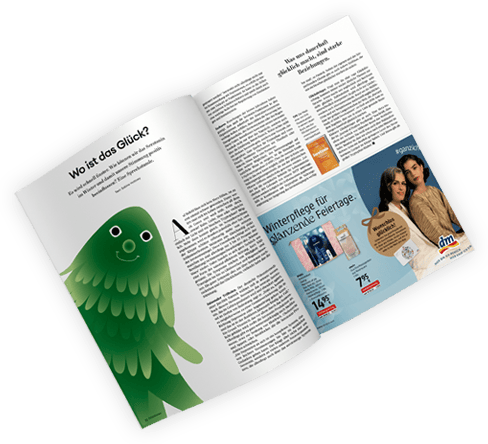
Where is happiness?
It gets dark quickly. How can we positively influence serotonin levels in winter and thus our mood? A consultation.
Language: German
Published on: www.diepresse.com
Where is happiness?
It gets dark quickly. How can we positively influence serotonin levels in winter and thus our mood? A consultation.
A heart can’t be filled on command once it’s become heavy. Then you get lost in life amidst all the good things and become gloomy. Is something missing? Peace, love, meaning, or perhaps simply light and a little tryptophan? Possibly. More on that in a moment. Having arrived in the end of November, things outside become rather dull, and the body reflexively releases more of its sleep hormone, melatonin. At the same time, serotonin levels drop. This change manifests itself in mood swings, aka “winter blues,” in some people (though it’s only 5 to 10 percent of the population). Technically, this is a form of seasonal affective disorder, or SAD for short. The symptoms range from fatigue and sadness to loss of libido and stomach aches. A good time, then, to think about serotonin and happiness; perhaps that will lift your spirits.
Seasonal blues. German preventive medicine specialist Jan-Dirk Fauteck dedicates his new book to this hormone. He says that central serotonin, which is produced and acts in the brain, is particularly important in autumn. “If it drops, it can lead to mood changes that may veer towards depression or anxiety – and this is often the case during the darker months.”
One reason: Vitamin D, which is primarily produced through sunlight, stimulates serotonin production.
However, there are also medications, independent of the weather, such as those for lowering blood pressure, cholesterol, and appetite, or beta-blockers, which weaken serotonin production.
However, there are also medications, such as those for lowering blood pressure, cholesterol, and appetite, or beta-blockers, that weaken serotonin production.
Depression itself is a complex system that can range from mild mood swings to suicidal thoughts. However, this is not solely dependent on serotonin, but on many other neurotransmitters, which are also controlled by the serotonergic system. Serotonin is not only associated with depression; it fulfills a multitude of functions in the body. For example, it can protect cells from oxidative damage and thus also plays an important role in regulating inflammation and the immune system.
Edibles. Research in recent decades has shown that serotonin functions also play important roles in organ systems outside the central nervous system, including the regulation of energy balance, the hormonal system, and the gastrointestinal tract. You can influence your serotonin levels not only through daylight but also through diet, emphasizes Fauteck. However, this isn’t about direct serotonin, but rather a precursor, tryptophan. Good sources of tryptophan include red meat, certain types of fish such as tuna or mackerel, nuts, bran, and Parmesan cheese.
Another way to naturally boost serotonin levels One way to increase serotonin levels is by taking 5-hydroxytryptophan (5-HTP). While this is hardly possible through a normal diet, it is available in the form of supplements derived from the African plant Griffonia simplicifolia. “Unfortunately, the European Food Safety Authority has prohibited the use of pure 5-HTP, so since then only Griffonia seeds, possibly in combination with tryptophan, are available as a dietary supplement to increase serotonin levels,” says Fauteck. Besides our own and external chemistry, there are also external influences that make us a little happier than others.
Lucky charms. If you ask the rather vague field of happiness research, similar themes repeatedly come up. Poverty makes us unhappy and wealth doesn’t make us happy. However, contentment is interpreted very differently. There are not only differences between countries, but also between age groups. Around the time of our midlife crisis, for example, we tend to be less happy.
One of the world’s largest long-term studies, the Harvard Study of Adult Development, which has been running since 1938, concluded that healthy relationships are the primary factor in making us permanently happy.
There are also smaller sources of happiness. A meta-study published in the Journal of Positive Psychology described how simply viewing visual art can increase well-being. This is also known to be true for forests. It has been measured that after just ten minutes in dense greenery, we have a significantly lower level of the stress hormone cortisol in our bodies. And stress is considered a major tryptophan depleter.
Statement on the topic of melatonin and heart health
Language: German
Published on: ea3m
Statement on Melatonin and Heart Health
From November 7th to 10th, 2025, the annual congress of the American Heart Association (AHA) took place in the USA. At this scientific meeting, a preliminary report entitled “Long-term use of melatonin supplements to support sleep may have negative health effects” was submitted by Dr. Nnadi and colleagues from New York for general discussion.
In advance, this data was forwarded to various media outlets, which then interpreted and commented on it according to their personal opinions.
To correctly interpret the original data, the following should be noted:
1. This is a brief communication of preliminary data and not a scientific publication reviewed by experts, i.e., not a peer-reviewed paper in a scientific journal.
2. This is not a clinical study, but rather a collection of medical data from publicly accessible healthcare databases in various countries.
3. The authors point out that this is merely preliminary information that needs to be supplemented by further investigations before it can be considered reliable and definitively evaluated.
4. The authors themselves point out that the methodology of this study has many limitations/weaknesses. These can be summarized as follows:
a. The two groups compared are not necessarily identical with regard to basic data (age, gender, pre-existing conditions, etc.).
b. Information on the severity of the sleep disorder of the respective participants is unknown.
c. There is no information on how much melatonin was prescribed to the participants in the “melatonin group.”
d. It cannot be ruled out that the individuals in the “control group” also took melatonin, as the intake of dietary supplements or non-prescription melatonin could not be recorded. Thus, the
comparison group (primarily Americans = a country where melatonin is freely available) could even have taken more melatonin than the “melatonin group” (primarily English = a country where melatonin must be prescribed by a doctor).
5. The authors themselves explicitly point out that their observations were not designed to analyze a causal effect of anything, including melatonin. They point out that their study is therefore not suitable for attributing the increased incidence of heart problems in the melatonin group to melatonin. Therefore, any interpretations by editors suggesting that melatonin has negative effects after long-term use are not supported by this study and must be declared false. On the contrary, there is a multitude of scientific papers from various research groups that prove the exact opposite. Melatonin supplementation is still considered extremely safe and, in many respects, also effective. (See, among others, www.melatoninfacts.org)
LATEST BOOK
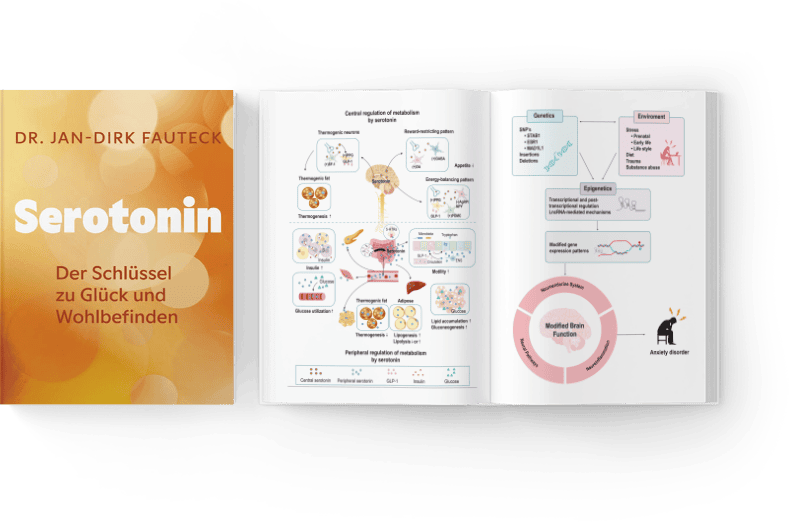
The Key to Happiness and Well-being.
How the Happiness Hormone Serotonin Influences Our Mental Health
Format: 13.5 x 21 cm , Pages: 240, Binding: Paperback

Dr. Fauteck videos
Dr. Jan-Dirk Fauteck gives a brief explanation about what chronobiology
is, and how to implement basic chronobiology habits into everyday life.